
Glenn County Sex Offender Checks
The California Megan's Law Website is managed by the California Department of Justice through the California Sex Offender Registry. Penal Code section 290.46 requires public notice about specified registrants. Glenn County residents use the state interface and narrow the results by county, city, ZIP code, address, map, or name.
The public tool is for awareness and personal or community safety. It is not a complete list of every person registered in California. Posting category rules determine whether a home address, ZIP-level location, or no public listing appears.
Glenn County Registration Contacts
Registration takes place through the law enforcement agency for the place where the registrant lives. For unincorporated Glenn County and Willows, the practical contact is Glenn County Sheriff's Office, 543 West Oak Street, Willows, 530-934-6441. For Orland, contact Orland Police Department, 817 Fourth Street, Orland, 530-865-1616.
Glenn County Sheriff
Registration contact for unincorporated Glenn County and Willows.
543 West Oak Street
Willows, CA 95988
530-934-6441
Orland Police Department
Registration contact for residents within Orland.
817 Fourth Street
Orland, CA 95963
530-865-1616
Official sources did not publish a specific registration appointment schedule or local fee. Registrants should call the proper agency for current instructions. Public-search users should use the DOJ registry rather than calling for a list.
California Megan's Law Website Searches
The registry requires the user to accept its legal warnings before searching. A county filter gives a broad Glenn County view, while city, ZIP, and address tools can focus on Orland, Willows, or another community. A name search works when identity is known. Location search works better for community awareness without a specific person in mind.
Search more than one location field when boundaries matter. A county search can catch records outside city limits, while a city or ZIP search can narrow the map. Address searches are useful for a small area, but the California interface's current radius choices should be confirmed on the live screen rather than assumed from another registry.
- Open the California Megan's Law Website and read and accept the conditions of use.
- Choose a name search or enter a city, Glenn County, ZIP code, or address-based location.
- Review the list or map and compare identifiers without assuming that a similar name is the same person.
- Open the public profile and read the disclosed offense, location category, physical description, and other posted details.
| Search field | Type | Required | Notes |
|---|---|---|---|
| Name search | Text | Optional | Search by a registrant's name. |
| City | Text or dropdown | Optional | Use Orland, Willows, or another California city. |
| County | Dropdown | Optional | Select Glenn County for countywide results. |
| ZIP code | Text | Optional | Useful Glenn County ZIPs include 95963, 95988, 95943, and 95951. |
| Address or map | Location view | Optional | Supports proximity-focused map or list searching; check current interface settings. |
| Disclaimer acceptance | Checkbox or button | Yes | Legal warnings and use conditions must be accepted before search. |
Glenn County Address Posting Limits
California's posting categories explain why nearby Glenn County results do not all show the same location detail. The home-address category displays a home address. The ZIP category shows the ZIP code, city, and county but withholds the home address. DOJ also confirms that some registrants are excluded from public website display.
- Home-address posting
- The public profile includes the registrant's home address under the applicable conviction-based category.
- ZIP-level posting
- The profile gives city, county, and ZIP but not the home address.
- Non-public registrant
- A person may remain subject to registration duties even though no public website profile appears.
Note: No public result is not proof that no registrant lives in the searched part of Glenn County.
Registry Profiles: What They Show
Penal Code section 290.46 and DOJ guidance define the public profile. Information concerns the offense that requires registration, not a person's unrelated criminal history. Display depends on the posting category and data available to DOJ.
| Name and aliases | Published identity names used to distinguish the registrant. |
|---|---|
| Photo and description | A photograph and physical descriptors, which may include gender, race, and other traits. |
| Date of birth | Identity information shown to help distinguish people with similar names. |
| Location | Home address, ZIP-level city/county location, or no public posting, based on legal category. |
| Registrable offense | The crime or crimes that create the registration duty, with statute and available conviction or release information. |
| Risk context | Risk-related information may appear when available, including Static-99R or SARATSO context. |
| Special adjudication | Prior adjudication as a sexually violent predator may appear when applicable. |
Identity fields should be reviewed together. A name match alone may be misleading, so compare the photograph, age or date of birth, physical traits, offense data, and disclosed location. If the profile has changed since a prior search, rely on the current DOJ record and contact law enforcement about a material concern.
Glenn County Profiles Are Narrow
A registry profile is not a complete rap sheet or a Glenn Superior Court docket. State law does not allow the Megan's Law profile to disclose offenses other than the crimes for which the person must register. To understand the public proceedings in a specific filed matter, use the Glenn County court case lookup.
The distinction also prevents a common reading error. A registration offense is not proof of unrelated conduct, and a risk score is not a prediction that a specific event will occur. Use the record only for the public-safety purpose for which DOJ released it.
Static-99R and SARATSO references, when present, belong to California's risk-assessment context. They do not replace the offense details or location category, and they should not be converted into a personal prediction. DOJ guidance is the proper source for what a displayed measure means.
The DOJ's Megan's Law FAQ explains the limits on public posting.
The official answers are the best source when a missing address or profile raises a question about what the website is allowed to show.
Registration Levels and Duties in California
SB 384 established tiered minimum registration periods. Adult tiers run for 10 years, 20 years, or life. Juvenile tiers use 5-year and 10-year minimum periods. Tier duration does not by itself state what address detail the public website will display, since tier rules and posting categories answer different questions.
A minimum period is not a promise that a profile vanishes on an anniversary. Legal eligibility, agency records, and any required process control the result. Anyone with duties under California law should get instructions from the registering agency rather than using a public profile as a compliance calendar.
| Registrant category | Minimum period | Public visibility |
|---|---|---|
| Adult Tier One | 10 years | Public detail depends on Penal Code section 290.46 posting category. |
| Adult Tier Two | 20 years | Public detail depends on posting category. |
| Adult Tier Three | Life | Public detail depends on posting category. |
| Juvenile Tier One | 5 years | Public display is governed separately by California law. |
| Juvenile Tier Two | 10 years | Public display is governed separately by California law. |
The research did not identify a published Glenn County verification-frequency schedule. Contact the appropriate local registering agency for the duties tied to an individual registration status.
The DOJ's registration-law summary provides the official overview of California posting rules.
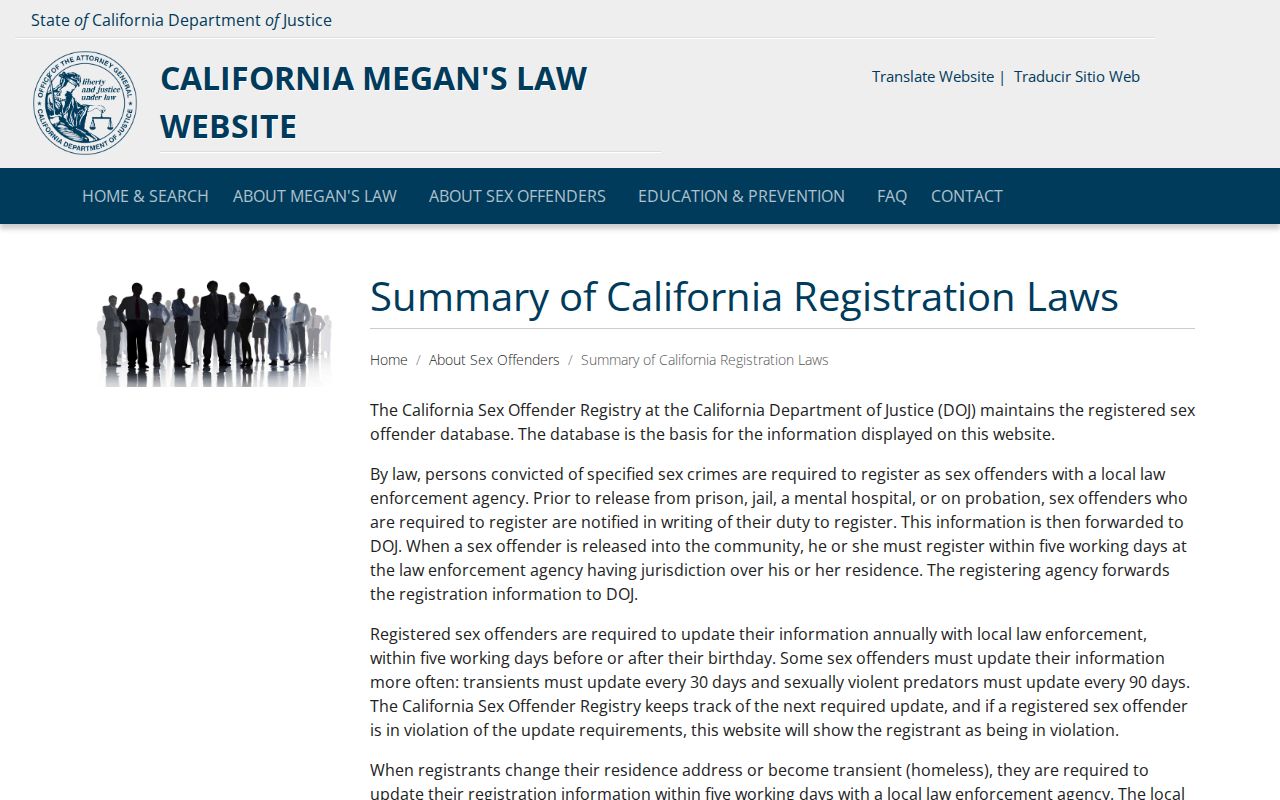
The state summary helps keep tier duration separate from what a Glenn County search result is permitted to display.
Glenn County Searches Through NSOPW
The National Sex Offender Public Website is the official U.S. Department of Justice cross-state layer. It searches participating public registries across states, the District of Columbia, territories, and Indian Country. Use it when a person or location question reaches beyond California.
NSOPW does not replace the California source. For a Glenn County result, return to California Megan's Law for the state's profile and legal notices. Search coverage and displayed fields still depend on the contributing jurisdiction.
A cross-state search can be useful when someone recently moved or when the known location is uncertain. A missing NSOPW match still should not be treated as a clearance certificate. Name variants, jurisdiction posting rules, and data timing can affect what the national layer returns.
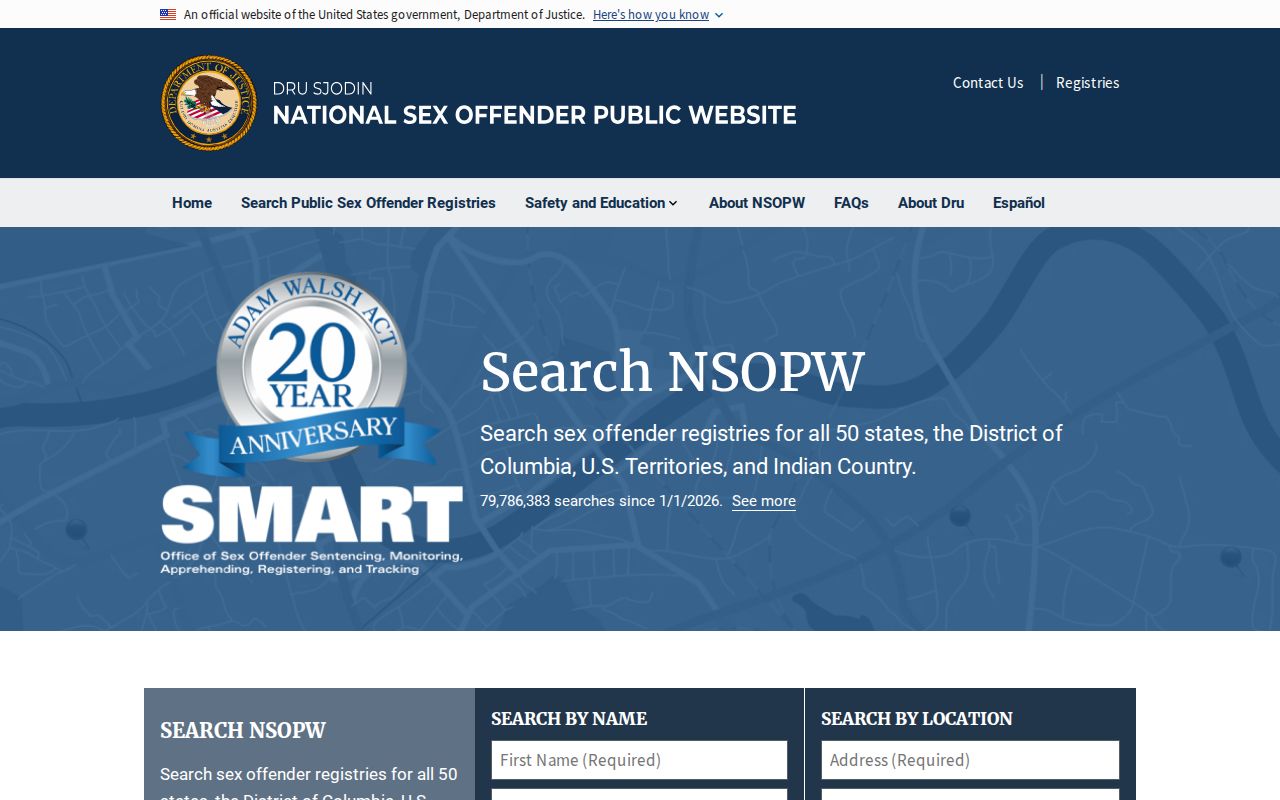
Using both official layers can help distinguish a California-only location search from a name search that may cross state lines.
Report Glenn County Noncompliance
A suspected registration violation should go to the responsible law enforcement agency, not to a public confrontation. Contact the Glenn County Sheriff's Office for unincorporated areas and Willows, or Orland Police Department for Orland. Use 911 for an immediate emergency.
Give the agency the facts that prompted concern, such as the relevant public profile, place, and time. Do not treat a stale map point or limited posting category as proof of a crime. Law enforcement can compare public information with nonpublic registration records and investigate.
Using Registry Information Lawfully
Registry information supports informed safety planning and community awareness. It does not authorize threats, harassment, vigilantism, trespass, or any other offense. DOJ's conditions apply each time the California search is used.
The official penalties for misuse page states the added consequences under Penal Code section 290.46.
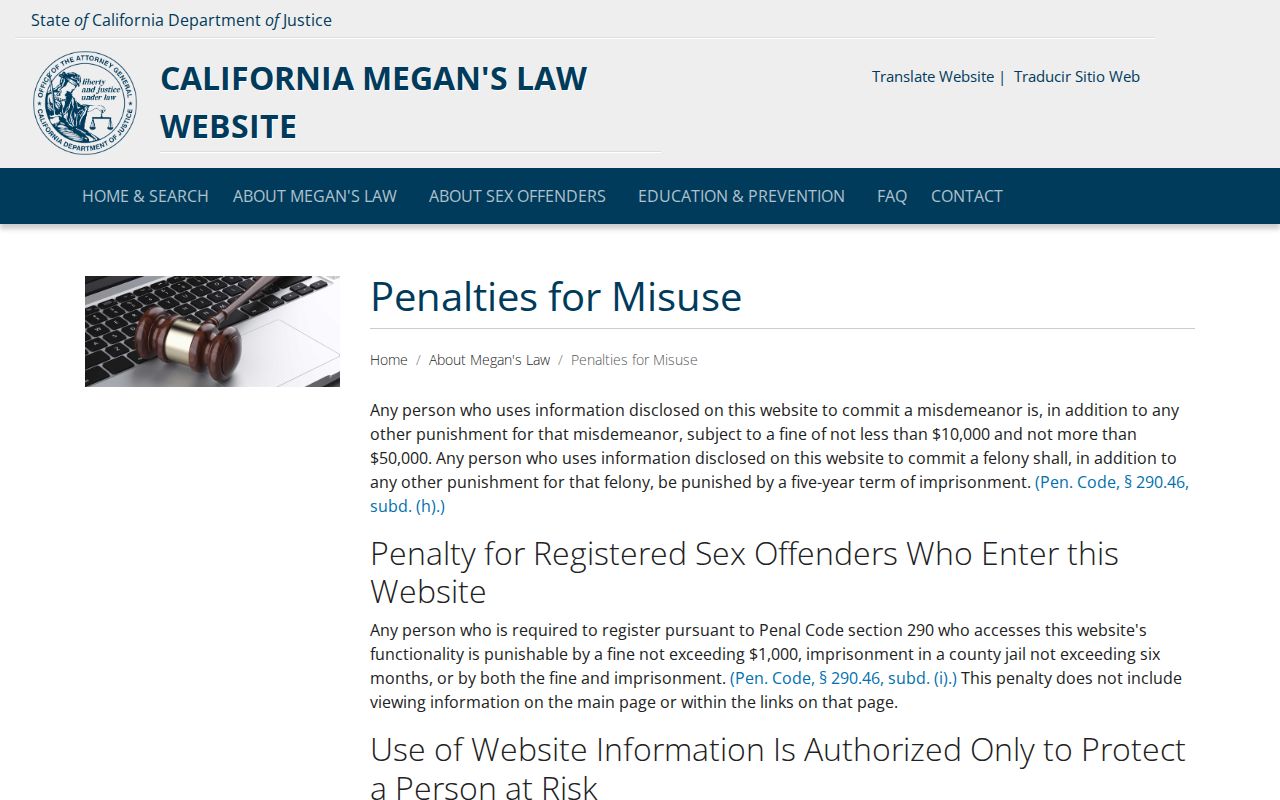
The warning makes clear that public access comes with legal limits on what a searcher may do with the information.
Misuse is a crime: Under Penal Code section 290.46, using registry information to commit a misdemeanor can add a fine of $10,000 to $50,000. Using it to commit a felony can add a five-year prison term. Do not harass, threaten, intimidate, or target a registrant or household.
Verify facts through the originating agency and report a true safety concern through lawful channels. Public registry access is designed to improve awareness, not to transfer law enforcement powers to private individuals.